

In 2026, small businesses are no longer competing only within their local markets. Thanks to digital platforms, social media, and e‑commerce, even the smallest brand can reach a global audience. However, this opportunity comes with intense competition. Customers are exposed to thousands of brands every day, and only those with a clear, consistent, and authentic identity stand out. This is why building a powerful brand identity is no longer optional—it is essential for survival and long‑term growth.
Brand identity is more than a logo or a color palette. It is the complete perception people have about your business when they hear your name, visit your website, or interact with your content. For small businesses in Africa and beyond, a strong brand identity builds trust, attracts the right customers, and positions the business as credible and professional on an international stage.
This guide breaks down, step by step, how small businesses can build a strong, future‑ready brand identity in 2026, using proven branding principles and modern digital strategies.
Understanding Brand Identity: What It Really Means
Brand identity is the collection of visible and invisible elements that define how a business presents itself to the world. It includes visual components such as logos, typography, colors, and imagery, as well as intangible elements like brand voice, values, personality, and customer experience.
A strong brand identity answers three critical questions:
Who are you as a business? What problem do you solve and why do you exist?
Who is your ideal audience? Who are you trying to attract, serve, and retain?
How should people feel when they interact with your brand?
When these questions are clearly answered, branding decisions become intentional rather than random. This clarity is what separates strong brands from businesses that constantly rebrand without direction.
SEO phrases naturally embedded here include brand identity development, brand strategy services, and branding for small businesses.
Step 1: Define Your Brand Foundation
Every successful brand starts with a solid foundation. Before thinking about design, businesses must define the strategic core of their brand.
Your mission explains what your business does today and who it serves. Your vision describes where the business is going in the future. Your values represent the principles that guide decisions, behavior, and communication. Together, these elements shape the personality of your brand.
Equally important is brand positioning. This defines how you want to be perceived compared to competitors. Are you premium or affordable? Bold or minimalist? Innovative or traditional? Clear positioning helps customers instantly understand where your brand fits in the market.
For small businesses, especially startups, this step prevents confusion and inconsistency as the brand grows across different platforms.
Step 2: Understand and Segment Your Target Audience
A brand that tries to speak to everyone ends up connecting with no one. In 2026, effective branding is customer‑centric. This means understanding your audience beyond basic demographics.
Your ideal customer profile should include age, location, income level, interests, challenges, online behavior, and purchasing motivations. For example, a beauty brand targeting young professionals will communicate differently from one targeting teenagers or luxury consumers.
Audience research allows you to tailor your messaging, visuals, and tone of voice to resonate emotionally. This emotional connection is what builds trust and loyalty over time.
From an SEO perspective, understanding your audience also helps identify the right keywords and search intent, ensuring your brand content attracts qualified traffic.
Step 3: Craft a Clear and Consistent Brand Voice
Brand voice defines how your business speaks across all channels. It reflects your personality and values in written and spoken communication.
Some brands sound professional and authoritative, others friendly and conversational, and some bold and disruptive. The key is consistency. Whether it is a website headline, a blog post, a social media caption, or an email campaign, your brand voice should feel familiar.
Consistency in brand voice builds recognition and trust. Customers begin to recognize your tone just as they recognize your logo. Inconsistent messaging, on the other hand, creates confusion and weakens brand credibility.
For small businesses working with a professional branding agency, brand voice guidelines help teams communicate effectively as the business scales.
Step 4: Develop a Strong Visual Identity
Visual identity is often the first impression customers have of a brand. In seconds, people form opinions based on design quality, color choice, and layout.
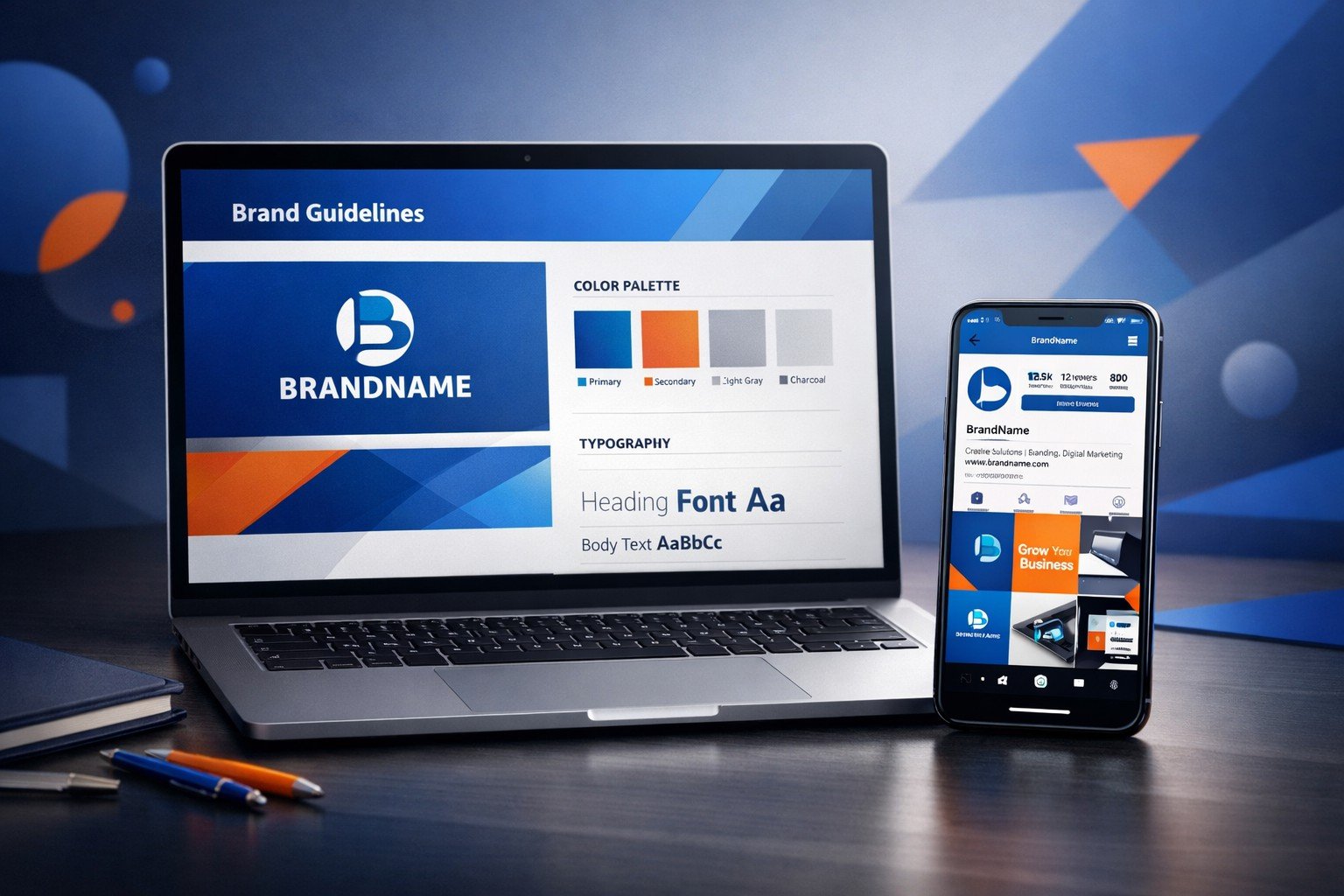
A strong visual identity includes a professionally designed logo, a defined color palette, typography styles, imagery guidelines, and layout consistency. These elements should work together to reflect the brand’s personality and positioning.
Color psychology plays a powerful role in branding. For example, blue often communicates trust and reliability, while black suggests luxury and sophistication. Typography also influences perception, with serif fonts feeling more traditional and sans‑serif fonts appearing modern and clean.
For digital brands, visual identity must be optimized for online use. Logos should be scalable, colors should display consistently on screens, and designs should adapt well to mobile devices and social media platforms.
SEO‑friendly brand identity ensures visuals support website performance rather than slow it down.

Step 5: Build a Cohesive Digital Brand Presence
In 2026, most brand interactions happen online. Your website, social media profiles, email newsletters, and digital ads must all reflect the same brand identity.
A professional website is the cornerstone of digital branding. It should be visually aligned with your brand, easy to navigate, mobile‑responsive, and optimized for search engines. Clear calls‑to‑action guide visitors toward inquiries, purchases, or consultations.
Social media platforms extend your brand personality. Profile images, cover photos, captions, and content style should remain consistent. This consistency reinforces brand recognition and improves engagement.
From an SEO standpoint, cohesive digital branding improves dwell time, reduces bounce rates, and increases trust signals for search engines.
Step 6: Align Brand Identity with Content Marketing
Content marketing plays a vital role in expressing brand identity. Blog posts, videos, case studies, and social content allow businesses to demonstrate expertise while reinforcing brand values.
For small businesses, publishing educational and informative content positions the brand as a trusted authority. Over time, this builds credibility and organic visibility.
Well‑written blog content also supports SEO efforts by targeting keywords such as professional branding agency, digital brand identity, and brand strategy services in a natural way.
Step 7: Maintain Consistency While Allowing Growth
Strong brands remain consistent but flexible. As markets evolve, brands may refine messaging, update visuals, or expand services. However, the core identity should remain intact.
Brand guidelines help maintain consistency across teams and platforms. These guidelines document logo usage, colors, fonts, tone of voice, and messaging principles.
Consistency builds long‑term brand equity. Customers begin to recognize and trust your brand instinctively, which reduces marketing costs and increases customer lifetime value.
Why Professional Brand Identity Development Matters
While some businesses attempt to build brand identity internally, working with a professional branding agency provides strategic insight, creative expertise, and objective perspective. Agencies help businesses avoid costly mistakes and ensure branding decisions align with long‑term goals.
For small businesses aiming for international growth, professional brand identity development creates a solid foundation for marketing, advertising, and expansion.
Final Thoughts: Building a Brand That Lasts
In 2026, a powerful brand identity is one of the strongest assets a small business can own. It builds trust, attracts the right customers, and supports every marketing effort.
By defining a clear brand foundation, understanding your audience, maintaining consistent voice and visuals, and investing in professional digital branding, small businesses can compete confidently on a global stage.
A strong brand is not built overnight, but with the right strategy and execution, it becomes a lasting driver of growth, credibility, and success.